
Pediatric occupational therapy (peds OT) is a specialized field of healthcare that helps children gain independence and participate in the meaningful activities, or ‘occupations,’ of childhood. These occupations include everything a child does to occupy their time, from playing and learning to getting dressed and eating a meal. When a child faces challenges in these areas due to physical, sensory, or cognitive differences, a pediatric OT can provide targeted support to help them build necessary skills. This guide explains the core principles of peds OT, its areas of focus, and how it supports children, families, and educators.
Defining Peds OT: More Than Just Play
While occupational therapy sessions often look like play, each activity is carefully chosen to address specific developmental goals. A pediatric OT uses a child’s natural motivation to play to build skills and foster independence. The term “occupation” in this context refers to all the purposeful activities that make up a child’s life. For an adult, occupations might include their job, managing a household, or hobbies. For a child, these occupations are different but equally important. They include being a student in a classroom, a friend on the playground, and a family member at home.
The primary goal of peds OT is to improve a child’s ability to engage successfully in their daily routines. This is achieved by analyzing why a child may be struggling with a particular task. For example, if a child has difficulty with handwriting, an OT will assess underlying factors like hand strength, motor control, visual perception, and posture. The intervention is then tailored to address these root causes, not just the symptom of messy handwriting. This might involve adapting the environment (like providing a special pencil grip), teaching a new skill through targeted exercises, or using specialized equipment to make the task more manageable. The focus is always on what is important and meaningful to the child and their family, promoting confidence and successful participation in life.
Core Areas of Focus in Pediatric Occupational Therapy
Pediatric OTs work on a wide range of skills that are foundational to a child’s development. Practitioners support growth across several key domains, and interventions are designed to address the unique profile of each child. While the specific goals vary, they generally fall into a few core categories.
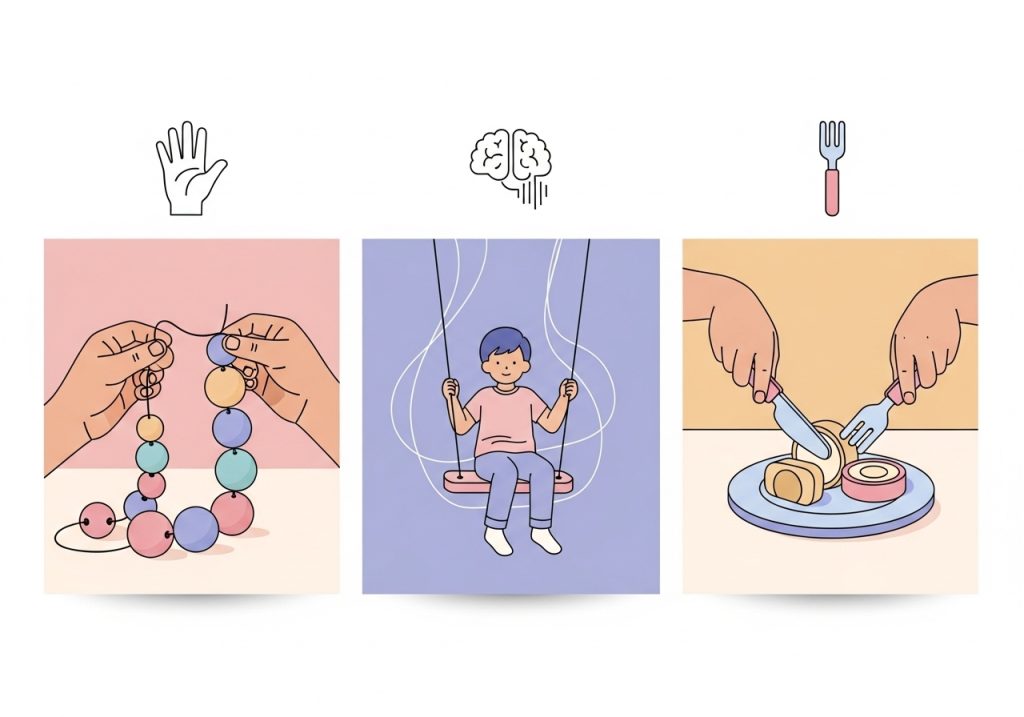
- Fine Motor Skills: This includes the development of small muscle movements in the hands and fingers. These skills are essential for almost every academic and self-care task. OTs work on improving hand strength, dexterity, and in-hand manipulation for activities like using scissors, tying shoes, managing buttons and zippers, and developing the control needed for tasks like writing.
- Visual Motor Skills: Often called hand-eye coordination, this is the ability to interpret visual information and respond with a coordinated motor action. It is critical for catching a ball, building with blocks, copying notes from a classroom board, and completing puzzles. OTs help children improve their ability to process what they see and use that information to guide their movements accurately.
- Sensory Processing: This involves how the nervous system receives, organizes, and responds to messages from the senses. An OT can help children who are over or under-responsive to sensory input like touch, sound, sight, and movement. For some children, the tag on a shirt can feel intensely irritating, while for others, they may not notice when their face is messy after eating. OTs design sensory diets and activities to help a child’s nervous system regulate this input, which improves their ability to focus, behave appropriately, and feel comfortable in their environment.
- Activities of Daily Living (ADLs): These are fundamental self-care tasks required for independence. OTs break down multi-step routines like getting dressed, brushing teeth, bathing, and using utensils into manageable steps. They teach adaptive techniques or introduce tools to help children who struggle with the motor planning, sequencing, or physical strength required for these personal care activities.
- Emotional Regulation and Social Skills: OTs recognize the strong link between sensory processing and emotional control. They provide tools and strategies to help children learn to manage their emotions, cope with frustration, and interact positively with peers. This might involve teaching self-calming strategies, practicing social scenarios, or using games to develop an understanding of social cues and expectations.
The Peds OT Process: From Assessment to Intervention
The journey with a pediatric OT typically begins with a comprehensive assessment. This is a critical information-gathering phase where the therapist aims to understand the child’s unique strengths and the specific challenges impacting their daily life. The assessment process is multi-faceted. It often includes standardized tests that compare a child’s performance in certain skill areas to that of their peers. More importantly, it involves skilled clinical observations where the OT watches the child perform various tasks in a natural context, like a playroom or classroom. The OT also conducts interviews with parents, caregivers, and teachers to get a full picture of the child’s abilities and difficulties across different environments.
Following the assessment, the OT synthesizes all the information to develop an intervention plan. This is a highly collaborative step. The therapist works directly with the family to set meaningful and achievable goals that reflect the family’s priorities. The intervention plan is tailored to the child’s specific needs and can be delivered in various ways. It might involve direct one-on-one therapy sessions, small group sessions to work on social skills, or a consultative model where the OT provides strategies and training to teachers and parents. Progress is monitored regularly, and the plan is adjusted as the child develops new skills. The process is dynamic and responsive to the child’s growth, ensuring the therapy remains relevant and effective.
The Role of Collaboration in a Child’s Success
A child’s success in occupational therapy does not happen in a vacuum. It requires a collaborative effort from a team of supportive adults who are invested in the child’s well-being. The pediatric OT acts as a facilitator, working closely with parents, caregivers, teachers, and other professionals (like speech therapists, physical therapists, or psychologists) to create a cohesive support system. This team approach is essential for ensuring that everyone is working toward the same goals and using consistent strategies.

This collaboration is what allows skills learned in therapy to be generalized to other environments, which is the ultimate goal. For example, an OT might teach a child a strategy for staying calm during a stressful activity in the clinic. For that strategy to be truly effective, the child’s teacher and parents need to know how to prompt and support its use in the classroom or at home. OTs often provide home exercise programs, classroom recommendations, and training to empower the other adults in a child’s life. When parents and educators are active partners in the therapeutic process, a child is much more likely to make lasting progress.
Practical Tools and Resources for Skill Building
Supporting a child’s development often involves using practical, engaging tools that make learning feel more like fun than work. The right resources can transform a challenging task into a motivating activity. From worksheets that build fine motor control and handwriting skills to games that promote sensory exploration and emotional awareness, these materials are a key part of the therapeutic toolkit. Low-prep printable activities are particularly useful for busy therapists, teachers, and parents who need effective, evidence-informed materials without extensive setup time.
When looking for resources, it is beneficial to seek out materials created by professionals with direct clinical experience. Activities designed by occupational therapists ensure that the tools are not just engaging but also developmentally appropriate and strategically targeted to specific skills. They are built on a deep understanding of child development and the underlying components of a task. By integrating well-designed activities into therapy sessions, classroom centers, or daily routines at home, you can effectively support a child’s journey toward greater confidence and independence in their daily occupations.
Ready to find practical, OT-created resources to support skill development? The Inspiring OT offers a wide range of low-prep, printable activities designed to make learning engaging and effective. Explore our collection of tools for fine motor, visual motor, sensory, handwriting, and life skills to simplify your planning and help your learners succeed.
Leave a Reply