
Therapeutic play is a structured approach that uses play activities to help children address and resolve psychosocial, physical, and developmental challenges. It is a powerful tool used by occupational therapists, educators, and caregivers to support skill acquisition in a way that is natural and motivating for a child. This approach recognizes that play is the primary occupation of childhood and the medium through which children learn about themselves and the world.
Understanding Therapeutic Play: More Than Just Fun
While all play is beneficial, therapeutic play is distinct from free, unstructured play. The key difference is intent. According to the Association for Play Therapy, it is a structured, theoretically based approach that uses the normal learning processes of children to achieve specific outcomes. A therapist or educator selects activities and materials purposefully to target areas like fine motor skills, sensory processing, emotional regulation, or social interaction. The adult acts as a facilitator, creating a safe environment and subtly guiding the experience to promote growth, but the child still leads the activity within that structured framework.
For example, simply playing with blocks is fun. Using blocks to build a specific tower design to work on visual-motor integration and sequencing is therapeutic. The activity is still enjoyable, but it is intentionally designed to produce a developmental outcome.
The Core Goals of Therapeutic Play in Child Development
Therapeutic play is versatile and can be adapted to address a wide range of developmental objectives. The goals are always tailored to the individual child’s needs.

- Cognitive Skills: Activities can be designed to improve problem-solving, attention, memory, and executive functioning skills like planning and organization. For children who struggle with these areas, specific games can help them practice and build confidence.
- Physical and Motor Skills: Many activities target fine motor skills (like buttoning or drawing), gross motor skills (like balance and coordination), and visual-motor integration (hand-eye coordination).
- Sensory Processing: Play provides a natural context for introducing different sensory experiences. A therapist can use play to help a child better process and respond to sensory input from their environment, a key component of SPD occupational therapy, whether they are over-responsive or under-responsive.
- Emotional Regulation: Through pretend play or specific games, children can learn to identify, express, and manage their emotions in a safe space. This aligns with frameworks like the Zones of Regulation, which helps children build self-awareness and develop coping strategies for frustration, anxiety, or anger.
- Social Skills: Group play activities encourage turn-taking, sharing, communication, and understanding social cues. It helps children learn to cooperate and navigate peer interactions successfully. This can be especially important in social skills training for individuals with autism.
How to Facilitate an Effective Therapeutic Play Session
Creating a successful therapeutic play experience involves careful planning and observation. The role of the adult is to be a supportive guide, not a director. A trained facilitator knows how to create an environment where children can express themselves safely and work through challenges. As research from George Washington University notes, this process allows children to express themselves through play in a way that feels natural. Here are a few key steps:
- Establish Clear Goals: Before starting, identify what specific skill you want to target. Is the goal to improve pincer grasp, practice turn-taking, or tolerate a new texture? Having a clear objective helps you choose the right activity.
- Prepare the Environment: Set up a space that is comfortable, safe, and free from unnecessary distractions. Have all the materials ready before inviting the child to play. This ensures the session flows smoothly.
- Select Appropriate Activities: Choose activities that are matched to the child’s developmental level and interests. The activity should be challenging enough to promote growth but not so difficult that it causes frustration (the “just-right challenge”).
- Observe and Adapt: Pay close attention to the child’s cues. Are they engaged, frustrated, or bored? Be flexible and ready to modify the activity based on their responses. The child’s experience is the priority.
- Use Encouraging Language: Focus on effort rather than outcomes. Use specific praise like, “I like how you kept trying to fit that piece,” instead of a generic “good job.” This builds resilience and self-esteem.
Practical Examples of Therapeutic Play Activities
The beauty of therapeutic play is that almost any activity can be adapted to meet specific goals. Here are a few examples across different domains:
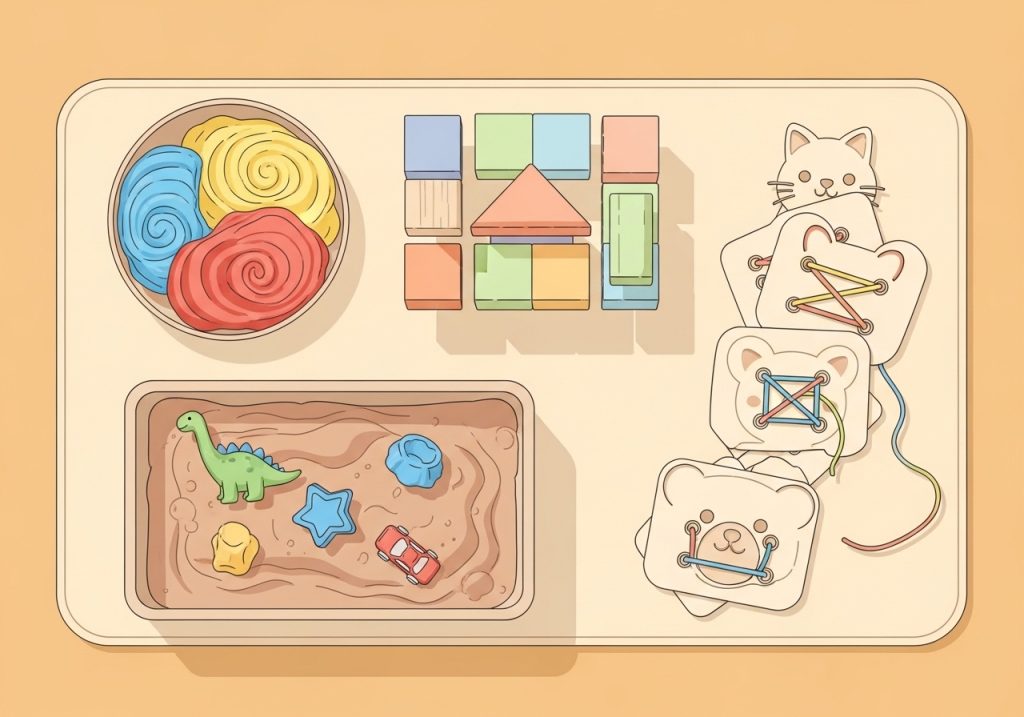
- For Fine Motor Skills: Using therapy putty or playdough to find hidden beads targets hand strength and finger isolation. Lacing cards or stringing beads improves bilateral coordination and pincer grasp.
- For Sensory Processing: A sensory bin filled with rice, beans, or water beads allows for tactile exploration in a controlled way. A weighted blanket or swinging can provide calming proprioceptive and vestibular input.
- For Emotional Regulation: Using puppets to act out a challenging social scenario helps children practice communication and problem-solving. Drawing or painting can be a non-verbal way for a child to express feelings.
- For Visual-Motor Skills: Completing puzzles, copying block designs, or playing games like Connect Four helps children coordinate what they see with what they do with their hands.
Integrating Therapeutic Play into Your Practice
Incorporating therapeutic play does not require expensive equipment or complicated setups. For therapists, it means viewing every session through a lens of purposeful play. For teachers, it can involve setting up specific centers in the classroom that target certain skills. For parents, it means being intentional during playtime, whether it’s building with LEGOs to improve finger dexterity or playing a board game to practice turn-taking and frustration tolerance.
By understanding and applying the principles of therapeutic play, you can transform simple activities into powerful opportunities for growth. The key is to start with a clear goal, stay attuned to the child’s needs, and remember that meaningful progress happens when a child is motivated and engaged.
Ready to bring more purposeful play into your therapy sessions, classroom, or home? The Inspiring OT offers a wide range of practical, low-prep printable resources designed by an experienced occupational therapist. From fine motor worksheets to sensory toolkits, you can find engaging activities that make skill-building effective and fun.
Leave a Reply