
Therapeutic play is a structured approach that uses play to help children address and resolve psychosocial difficulties and achieve optimal growth and development. While it looks like fun, this method is an intentional, goal-directed process facilitated by a therapist, educator, or parent to support a child’s specific needs. It recognizes that play is a child’s natural language and provides a safe outlet for expression, learning, and skill-building. Unlike unstructured playtime, every activity is chosen with a specific outcome in mind, making it a powerful tool for supporting learners.
The Core Principles of Therapeutic Play
The distinction between free play and therapeutic play lies in its purpose and structure. While free play is spontaneous and child-led, therapeutic play is guided by an adult to address specific developmental goals. According to the Association for Play Therapy, this process is systematic and based on a theoretical model that helps establish a strong interpersonal connection between the child and the facilitator. This relationship is fundamental to creating a sense of safety and trust.
Several core principles define this approach:
- It Is Goal-Directed: Before a session begins, the facilitator identifies specific skills to target. This could be anything from improving pincer grasp to practicing turn-taking. The chosen activities directly support the development of these skills.
- The Environment Is Controlled: The space is intentionally set up to be safe, welcoming, and free from excessive distractions. Materials are selected beforehand to align with the session’s goals, giving the child meaningful choices within a structured context.
- The Facilitator Is an Active Participant: The adult is not a passive observer. They actively engage with the child, offering guidance, modeling behaviors, and providing gentle encouragement. They might ask open-ended questions to stimulate problem-solving or help a child narrate their actions to build language skills.
- Observation Informs Action: A key part of the process involves the facilitator carefully observing the child’s behavior, communication, and emotional responses. These observations provide critical information about the child’s strengths and challenges, allowing the facilitator to adjust the activity to provide the “just-right challenge.”
Why Therapeutic Play is Essential for Skill Development
Because it is inherently motivating, play is an ideal medium for learning. When children are engaged and having fun, they are more likely to attempt challenging tasks and persist through minor setbacks. Therapeutic play capitalizes on this natural inclination, fostering growth across all major developmental domains. The process supports the whole child, building a strong foundation for academic and life skills.
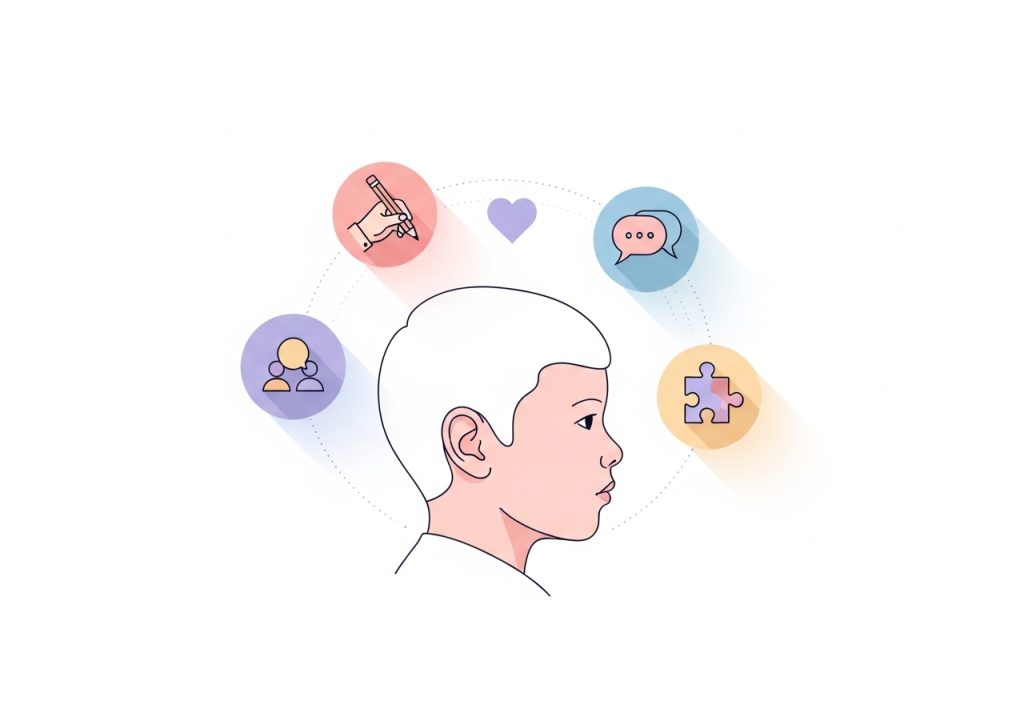
- Cognitive Skills: Activities that involve sorting, matching, building, or following sequences help strengthen executive functions. When a child follows a multi-step craft instruction or plans a structure with blocks, they are practicing skills like working memory, planning, and attention. Strategy games also encourage flexible thinking and problem-solving.
- Physical and Motor Skills: Many play activities are excellent for motor development. Using tools like scissors, crayons, or tweezers develops fine motor control and hand strength. Gross motor skills are enhanced through activities like building an obstacle course, playing catch, or participating in movement games that improve balance, coordination, and body awareness.
- Social and Communication Skills: Interactive play is a natural setting for developing social competence. Games with rules teach children about turn-taking, cooperation, and handling winning and losing. Pretend play scenarios allow children to practice conversational skills, empathy, and perspective-taking, which are key components of effective social skills training.
- Emotional Regulation: Play offers a safe way for children to explore and process big feelings. A facilitator can use puppets to act out a frustrating situation, helping a child identify their emotions and brainstorm positive responses. This aligns with frameworks like the Zones of Regulation, where children learn to recognize their emotional state and use tools to manage it. This process builds emotional literacy and resilience.
Practical Examples of Therapeutic Play Activities
The adaptability of therapeutic play is one of its greatest strengths. Common household items and simple toys can be used to create powerful learning experiences. The key is to select an activity that aligns with a specific goal and keeps the child engaged. Here are a few practical examples categorized by the primary skill they support.
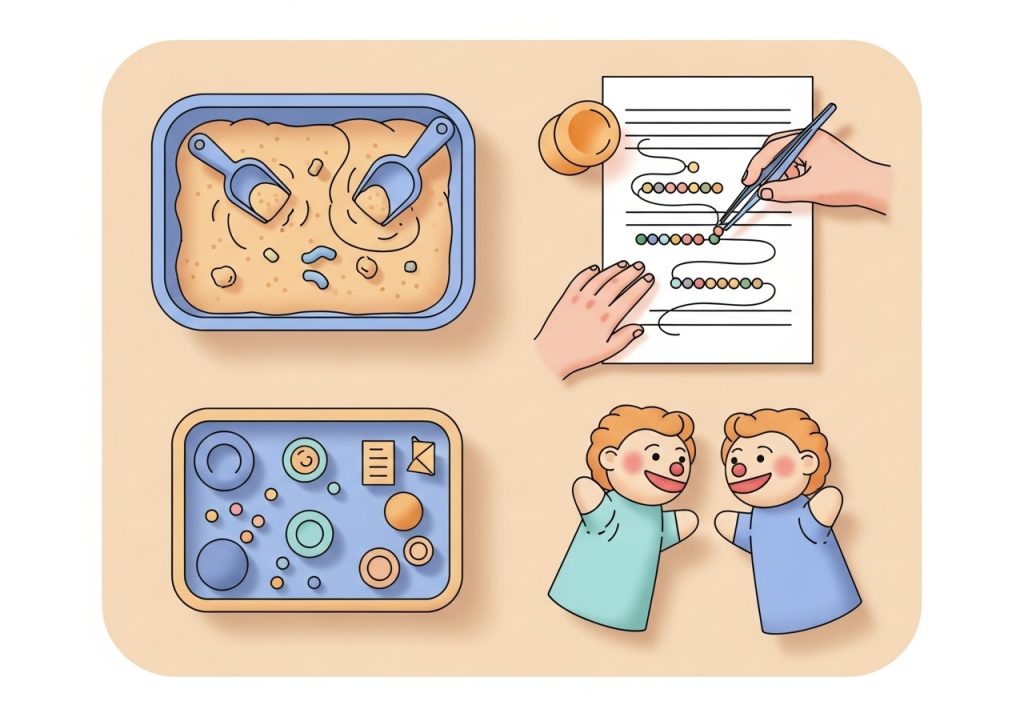
- For Fine Motor Control: Activities that require precise hand and finger movements are perfect for building dexterity. This includes threading large beads onto a shoelace, using clothespins to pick up pom-poms, tearing paper to create a collage, or rolling and shaping play dough. These tasks strengthen the small muscles in the hands needed for tasks like writing and buttoning.
- For Sensory Processing: Sensory bins offer a contained way for children to explore different textures and materials. Filling a container with rice, kinetic sand, or water beads and hiding small toys inside encourages tactile exploration. This type of activity can be either calming or alerting, depending on the child’s needs, and is a common strategy in SPD occupational therapy.
- For Emotional Expression: Non-verbal activities can help children express feelings they may not have the words for. Drawing a picture of what their anger looks like, using puppets to tell a story about a time they felt sad, or choosing music to match different moods can all be effective ways to build emotional vocabulary and self-awareness.
- For Following Directions and Planning: Activities with clear steps help children practice listening and sequencing. This could involve building a specific model with LEGOs from a picture, playing a game like “Simon Says” with increasing complexity, or helping with a simple cooking task that requires following a recipe. These activities build foundational skills for academic success.
Implementing Therapeutic Play in Different Settings
Therapeutic play is not limited to a clinical setting. Its principles can be effectively applied in classrooms and at home to support a child’s development in their natural environments. As research from the National Institutes of Health highlights, play therapy is a valuable intervention for a range of childhood issues.
In a Therapy Session: An occupational therapist designs play-based interventions that are directly linked to a child’s treatment plan. For example, a child working on bilateral coordination might be asked to string beads or use a rolling pin with both hands. The therapist structures the activity, provides cues, and documents the child’s progress toward their specific goals. These treatment plans are a core part of play therapy best practices. In the Classroom: Teachers can integrate therapeutic play principles into their daily routines and learning centers. A dramatic play area can be used to foster social problem-solving. A “calm-down corner” equipped with sensory tools like weighted lap pads or fidgets can support self-regulation. Even simple group games can be structured to encourage cooperation and communication among students. At Home: Parents and caregivers are in a unique position to use play to connect with their children and reinforce skills. This does not require expensive toys or elaborate setups. It can be as simple as turning cleanup into a sorting game to practice categorization, or narrating actions during bath time to build vocabulary. The focus is on being present and intentional, turning everyday moments into opportunities for skill-building.By integrating purposeful play into a child’s daily life, you provide a powerful and motivating context for learning and growth. The key is to start with a clear goal, choose an engaging activity, and focus on the connection and process over a perfect outcome. This approach not only helps children develop critical skills but also strengthens their confidence and relationships.
Ready to put these ideas into action? Finding the right activities can feel overwhelming. The Inspiring OT offers a wide range of practical, low-prep resources designed by an experienced occupational therapist. Explore our collection of printable activities, guides, and toolkits to make skill-building engaging and effective for your learners.
Leave a Reply