
To improve hand eye coordination, a person must consistently practice activities that connect visual input with controlled hand movements, progressing from simple, large-scale actions to more complex, precise tasks. This skill, also known as visual-motor integration, is the foundation for countless academic, athletic, and daily living activities. From forming letters with a pencil to catching a ball or buttoning a coat, the ability of the eyes and hands to work together is critical for a learner’s success and independence. This guide provides a step-by-step approach for occupational therapists, educators, and parents to support the development of this essential skill.
Step 1: Strengthen Foundational Visual Tracking Skills
Before the hands can accurately respond to what the eyes see, the eyes must be able to effectively gather information. Visual tracking, the ability to follow a moving object or scan across a stationary one, is the first building block. Without strong tracking skills, the brain receives incomplete or inaccurate information, making coordinated movement difficult. Improving the brain’s ability to process visual information is a prerequisite for precise motor output. You can start with simple activities that encourage focused eye movements without demanding a complex hand response.
Effective activities for visual tracking include:
- Flashlight Games: In a dimly lit room, have the learner follow a flashlight beam on the wall or ceiling with only their eyes. Move the light slowly at first, then introduce different speeds and patterns.
- Bubble Tracking: Blow bubbles and encourage the learner to watch them float and pop. This is a fun and engaging way to practice following unpredictable movement.
- Ball Rolling: Sit on the floor with the learner and roll a ball back and forth. Instruct them to “keep their eyes on the ball” as it moves between you.
- Reading Pointer: When reading, use a finger or a reading guide to slide under the words. This helps train the eyes to move smoothly from left to right across a page.
Step 2: Incorporate Gross Motor Ball Activities
Once foundational visual skills are in place, the next step is to integrate large body movements. Gross motor activities help build body awareness and teach the brain how to coordinate the limbs in response to a moving target. These actions create a general framework for timing and force that can be refined later for smaller tasks. Using larger, slower-moving objects like beach balls or balloons reduces the difficulty and increases the chances of success, which builds confidence.
Helpful gross motor activities include:
- Balloon Toss: Hit a balloon back and forth, trying to keep it from touching the ground. The slow, floating movement of a balloon provides extra time for visual processing and motor planning.
- Catching and Throwing: Start with a large, soft ball. As skills improve, gradually introduce smaller balls. According to health experts at Harvard, simple activities like playing catch are effective for sharpening coordination.
- Beanbag Tossing: Set up a target, such as a laundry basket or a hula hoop on the ground. Have the learner toss beanbags into the target from varying distances.
- Wall Bouncing: Practice bouncing a playground ball against a wall and catching it. This repetitive action helps develop rhythm and timing.
Step 3: Introduce Targeted Fine Motor Tasks
With a solid foundation in gross motor coordination, you can shift the focus to fine motor activities. These tasks require precise control of the small muscles in the hands and fingers, guided by careful visual attention. Activities involving manipulation of small objects are excellent for strengthening the connection between what the eyes see and what the hands do on a detailed level. This stage is where accuracy and control become the primary goals.
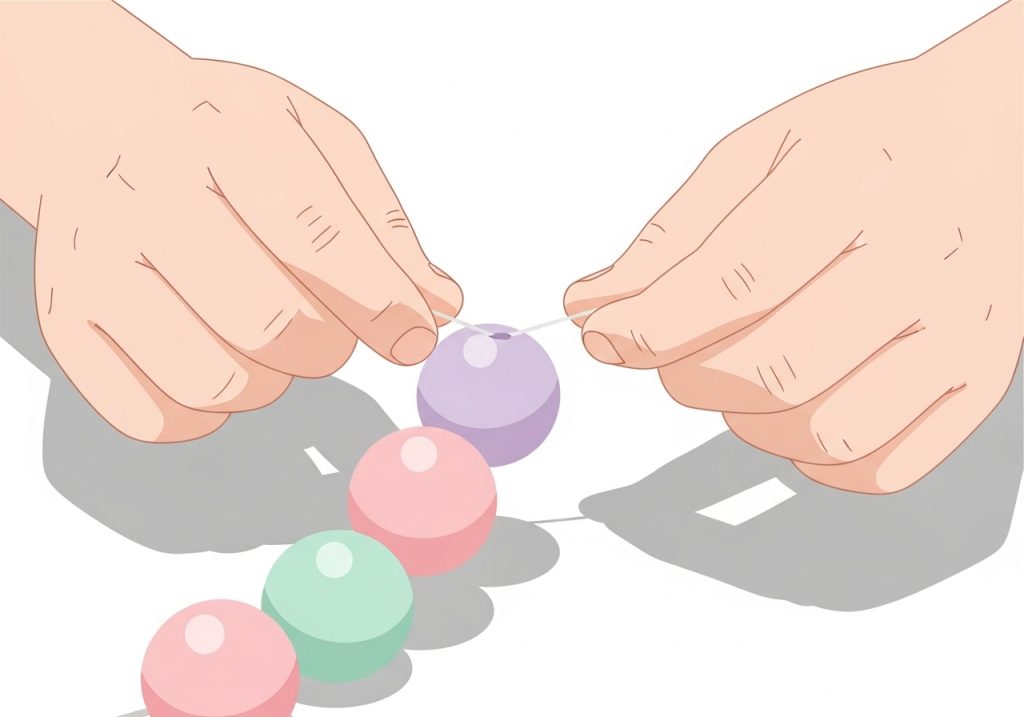
Consider incorporating these fine motor exercises:
- Threading and Lacing: Use large beads and a thick string or shoelace to start. As the learner’s skill develops, move to smaller beads and thinner strings. Lacing cards are another great option.
- Using Tongs or Tweezers: Set up a transfer activity where the learner moves small items like cotton balls, pompoms, or blocks from one container to another using tongs or large tweezers.
- Puzzles: Jigsaw puzzles, especially those with interlocking pieces, require the user to visually analyze shape and orientation and then manually manipulate the piece to fit.
- Play-Doh or Clay: Rolling, squishing, and shaping modeling clay builds hand strength and control, which are necessary components of coordinated hand movements.
Step 4: How to Improve Hand Eye Coordination with Pre-Writing Activities
Pre-writing activities directly bridge the gap between visual perception and the controlled hand movements needed for handwriting and drawing. These exercises teach the hand to produce the shapes and lines the eye perceives. They are critical for developing the motor memory required to form letters and numbers automatically. Many of these tasks can be presented as games or art projects to keep learners engaged. If you are looking for more ideas, you can explore more practical visual motor activities that support these skills.
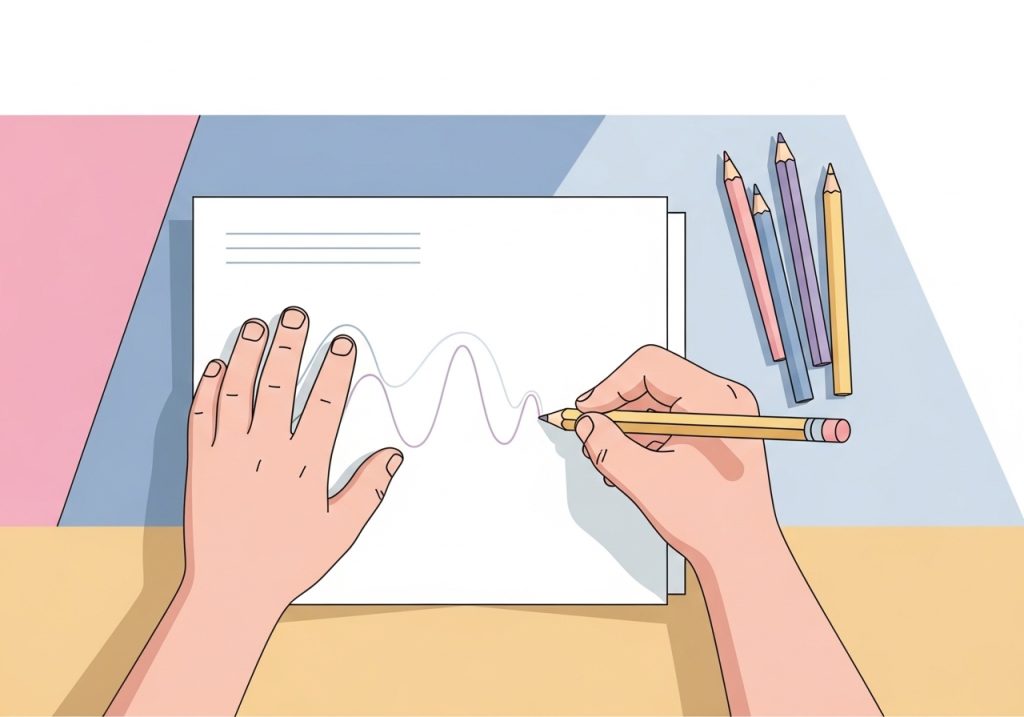
Focus on these pre-writing exercises:
- Tracing: Provide worksheets with dotted lines forming shapes, letters, or simple pictures. Tracing helps the hand learn the path of different strokes.
- Mazes: Navigating a maze requires the learner to look ahead, plan a path, and control the pencil to stay within the lines, avoiding dead ends.
- Connect-the-Dots: This classic activity requires the eyes to find the next number in a sequence and then guide the hand to draw a line connecting it to the previous one.
- Copying Designs: Start with simple shapes like a cross, square, or triangle. Draw the shape on one side of a paper and have the learner copy it on the other side. You can use graph paper to provide more structure.
Step 5: Use Construction and Building Toys
Building with blocks, LEGOs, or other construction toys is a powerful way to enhance hand-eye coordination. These activities demand spatial reasoning, visual planning, and precise motor execution. The learner must visually assess the structure, decide where the next piece should go, and then physically place it with accuracy. This process involves what researchers call target interception, where the hand must accurately move to a visually identified point in space. The three-dimensional nature of building adds a layer of complexity that is highly beneficial for skill development.
Encourage play with these types of toys:
- Wooden Blocks: Stacking blocks to build a tower requires a steady hand and careful placement to avoid toppling the structure.
- Interlocking Blocks: LEGOs and similar toys demand precise alignment and pressure to connect pieces, refining both visual and motor control.
- Magnetic Tiles: These tiles easily snap together, offering a rewarding experience while still requiring careful placement to build stable structures.
Step 6: Adapt Everyday Life Skills for Practice
The final step is to integrate hand-eye coordination practice into daily routines. Everyday tasks provide consistent, meaningful opportunities to reinforce skills in a natural context. Many self-care and household activities are complex visual-motor tasks that require attention and precision. By encouraging independence in these areas, you provide ongoing practice without needing to set aside dedicated therapy or instruction time. These are often considered essential abilities for independent living and serve a dual purpose in skill development.
Look for practice opportunities in these daily routines:
- Mealtime: Using utensils like a spoon or fork to scoop food and bring it to the mouth is excellent practice. Pouring water from a small pitcher into a cup also builds control.
- Getting Dressed: Buttoning buttons, zipping zippers, and tying shoelaces are advanced fine motor tasks that heavily rely on hand-eye coordination.
- Hygiene: Squeezing toothpaste onto a toothbrush and brushing teeth requires a surprising amount of coordination.
- Helping with Chores: Simple tasks like wiping a table with a sponge, placing items into a container, or watering plants all support skill development.
Improving hand-eye coordination is a process that builds over time through varied and consistent practice. By following a logical progression from foundational visual skills to complex, real-world tasks, you can effectively support a learner’s development. Remember that patience, encouragement, and making activities fun are key components of success. Integrating these targeted exercises into play and daily routines provides the rich experience needed to build this critical skill.
Ready to put these strategies into practice? Finding the right tools can make all the difference. The Inspiring OT offers a wide range of practical, low-prep printable activities and worksheets designed by an experienced occupational therapist to support skill development. From fine motor task cards to visual-motor worksheets, these resources are created to make learning engaging and effective for therapists, teachers, and parents.
Explore the full collection of evidence-informed resources at The Inspiring OT shop on Teachers Pay Teachers and find the perfect activities to help your learners thrive.
Leave a Reply