
Evidence-based practice (EBP) in therapy and education is the process of integrating clinical expertise, client values, and the best available research to make informed decisions about care and instruction. For occupational therapists, teachers, and parents, this means choosing interventions and strategies that have been shown to be effective. It helps ensure that the time and effort you invest in skill development are grounded in sound principles and are more likely to produce positive outcomes for your learners. According to research, therapists are expected to provide evidence-based services, and this principle extends to all professionals supporting child development.
EBP is not about rigidly following a manual without considering the individual. Instead, it is a dynamic approach that empowers you to combine what the research says with your professional judgment and what is important to the child and their family. This guide explores the components of EBP and provides concrete examples you can apply in your clinic, classroom, or home.
The Three Core Components of Evidence-Based Practice
Evidence-based practice rests on three equally important pillars. A decision is truly evidence-based only when all three are considered together. Neglecting any one component can lead to interventions that are ineffective or misaligned with a learner’s needs.

- Best Research Evidence: This refers to clinically relevant research, often from peer-reviewed journals. It includes findings from studies on the effectiveness of certain assessments, interventions, and teaching methods. The goal is to find high-quality research that applies to the specific population or problem you are addressing. Professional organizations like the American Occupational Therapy Association (AOTA) provide excellent resources and evidence summaries.
- Clinical Expertise: This is the knowledge and skill you have developed through professional experience and training. Your expertise allows you to identify a child’s unique strengths, needs, and circumstances. It helps you interpret the research evidence and adapt it to the individual learner you are working with.
- Client Values and Preferences: This component centers on the individual learner and their family. It includes their unique goals, cultural backgrounds, and personal preferences. An intervention supported by research is only effective if the child is motivated to participate and it aligns with the family’s priorities.
How to Find and Evaluate Clinical Evidence
Finding relevant research can feel like a challenge, but many accessible resources are available. Professional organizations are an excellent starting point. The American Occupational Therapy Association (AOTA), for example, provides practice guidelines and evidence summaries for its members. Academic databases like Google Scholar, PubMed, and ERIC (Education Resources Information Center) are also powerful tools for searching for studies on specific topics.
When you find an article, you do not need a Ph.D. to evaluate its relevance. Consider a few key questions. Who were the participants in the study, and are they similar to your learner? What was the intervention, and is it feasible to implement in your setting? What were the outcomes, and were they meaningful? Looking at systematic reviews or meta-analyses can be particularly helpful, as they synthesize the findings from multiple studies to provide a broader conclusion.
Practical Evidence Based Practice Examples for Skill Development
Applying EBP becomes clearer when you see it in action. The key is to connect a specific need with an intervention supported by evidence, then adapt it using your expertise and the learner’s preferences. Here are a few examples across different developmental areas.
Sensory Processing and Emotional Regulation
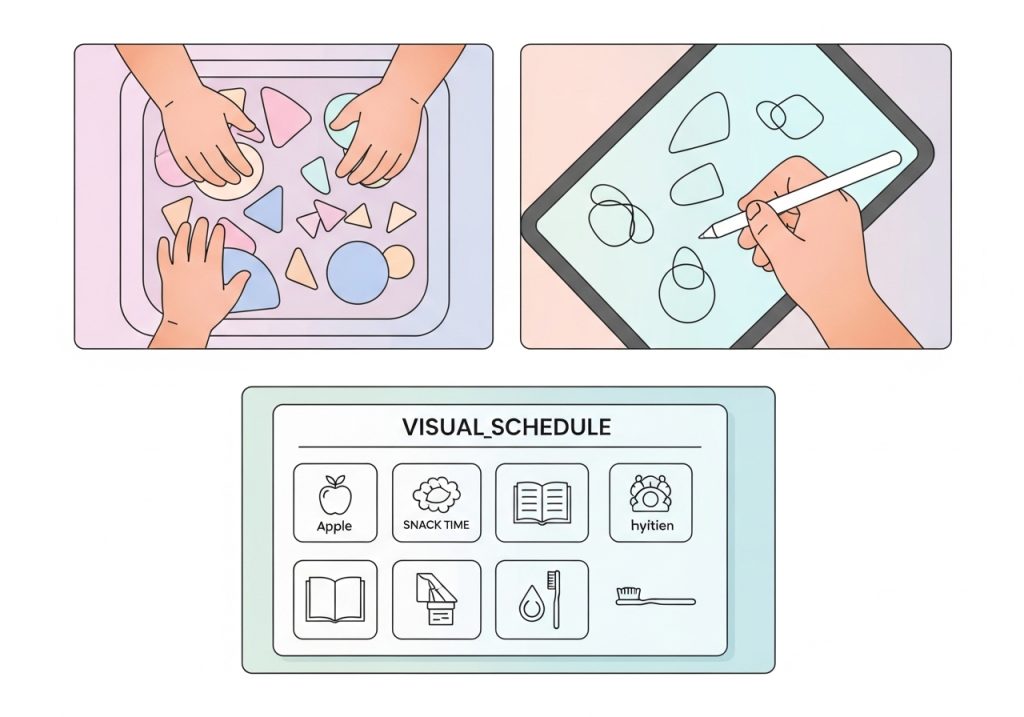
A student has difficulty staying seated and focused during class, showing signs of sensory-seeking behavior. Research suggests that for some children, sensory-based interventions can improve self-regulation. An evidence-based approach would involve using a formal assessment to understand the child’s sensory profile. Based on those results and clinical expertise, the therapist might implement the use of a weighted lap pad or resistance bands on the chair legs. The effectiveness is then monitored by tracking the child’s on-task behavior in the classroom.
Handwriting and Fine Motor Skills
A child struggles with letter formation and handwriting legibility. Numerous studies support multi-sensory approaches to teaching handwriting over simple rote practice. An OT or teacher using EBP might select a program like Handwriting Without Tears, which incorporates music, hands-on materials, and verbal cues. The choice is based on evidence supporting its methods. The professional then adapts the program’s pacing and activities based on the child’s specific motor challenges, which can also help improve hand eye coordination, and motivational interests, like using their favorite color play-doh to build letters.
Daily Routines and Transitions
A child with Autism Spectrum Disorder (ASD) experiences significant anxiety during transitions between activities at home or school. A large body of evidence shows that visual schedules are effective for increasing predictability and reducing challenging behaviors in individuals with ASD. A parent or educator could create a simple picture-based schedule for the daily routine. This decision is directly supported by research. It is then customized to the child by using photos of the actual objects and places and allowing the child to participate in setting up the schedule each day. This tool is one of many OT-informed classroom management strategies that foster independence.
A Simple Framework for Applying EBP
You can integrate evidence-based practice into your work by following a structured process. This ensures you systematically consider all three core components. Many clinicians find a five-step approach, as outlined by resources like MedBridge, to be a helpful guide.
- Formulate a Question: Start by clearly defining the problem or goal. For example, “For a 6-year-old with poor pencil grasp, what fine motor intervention is most effective for improving handwriting?”
- Find the Evidence: Search professional databases and resources for research related to your question.
- Appraise the Evidence: Evaluate the quality and relevance of the research you find. Does it apply to your learner and your setting?
- Integrate and Apply: Combine the research findings with your clinical judgment and the child’s and family’s goals and preferences to select and implement an intervention.
- Evaluate the Outcome: Monitor the learner’s progress. Use informal observation or formal data collection to determine if the intervention is working and make adjustments as needed.
Putting Evidence into Action in Your Daily Practice
Evidence-based practice is a commitment to thoughtful, informed, and effective support for learners. It is not about having all the answers but about knowing how to ask the right questions and where to look for credible information. By blending research with your own valuable experience and always keeping the learner’s needs at the center, you can make confident decisions that promote meaningful skill development.
Start by choosing one area you want to explore. Formulate a question about a challenge you are facing, and spend a little time searching for relevant evidence. This continuous cycle of inquiry, application, and reflection is the foundation of providing the best possible support for every child.
Ready to put these principles into practice? The Inspiring OT offers a wide range of practical, evidence-informed activities designed by an experienced occupational therapist. Our printable resources make it easy to support skill development in fine motor, sensory processing, handwriting, and more. Find engaging, low-prep materials to enhance your therapy sessions, classroom centers, or at-home learning today.
Leave a Reply