
Scaffolding in education is an instructional method where a teacher or therapist provides temporary, targeted support to a learner to help them achieve a new skill, gradually withdrawing that support as the learner’s competence increases. This approach allows a student to complete a task they could not do independently. As an occupational therapist, educator, or parent, understanding and using scaffolding can make a significant difference in helping learners build confidence and achieve their goals.
Defining Scaffolding in an Educational Context
The concept of scaffolding is rooted in the work of psychologist Lev Vygotsky and his theory of the “Zone of Proximal Development” (ZPD). The ZPD is the gap between what a learner can do on their own and what they can achieve with guidance. Scaffolding is the structured support that bridges this gap.
Think of it like the training wheels on a bicycle. The wheels provide stability while a child learns to balance and pedal. They are not meant to be permanent. Once the child develops the necessary coordination and confidence, the training wheels are removed. Instructional scaffolding works the same way. It is a temporary structure designed to be dismantled once the learner can stand on their own.
The Core Components of Effective Scaffolding
Effective scaffolding is not just about giving help; it involves a responsive process tailored to the learner’s needs. It is a form of explicit instruction where key components are modeled and supported. Key components often include:
- Modeling: The instructor demonstrates the task first. This could mean showing a child how to form a letter, complete a math problem, or follow the steps for getting dressed.
- Providing Prompts and Cues: These are hints or reminders that guide the learner. They can be verbal (“What comes next?”), visual (pointing to a picture schedule), or physical (gently guiding a hand holding scissors).
- Offering Feedback: The instructor gives specific, constructive feedback that helps the learner understand what they are doing correctly and what they can adjust. The goal is to encourage progress without causing frustration.
- Structuring the Task: Breaking a complex activity into smaller, more manageable steps makes it less overwhelming. A checklist for a morning routine is a great example of a structured scaffold.
Why Scaffolding Is a Powerful Teaching Tool
When implemented correctly, scaffolding offers significant benefits for learners of all abilities. It helps build a foundation for independent learning by making new skills feel attainable.
One of the primary advantages is the reduction of frustration. By providing the right amount of support, educators can keep a learner engaged and motivated. This positive experience builds confidence and fosters a positive growth mindset. Scaffolding also promotes a deeper understanding of the skill because the learner is an active participant in the process, not just a passive recipient of information. Ultimately, the goal is to foster true independence, and scaffolding is the pathway to get there.
Practical Scaffolding Strategies for Therapy and the Classroom
The principles of scaffolding can be applied to almost any learning goal. Here are some practical examples relevant to therapists, teachers, and parents:
Fine Motor Skills
- Task: Learning to use scissors.
- Scaffolds: Start with tearing paper, then move to snipping play-doh ropes. Introduce spring-loaded scissors that open automatically. Provide paper with thick, bold lines to cut along before moving to more complex shapes.
Handwriting
- Task: Writing the letter ‘B’.
- Scaffolds: Use verbal cues like “Big line down, frog jump up, little curve, little curve.” Provide worksheets with traceable dotted lines or letters inside highlighted boxes. Use a multi-sensory approach by forming the letter in sand or shaving cream first to strengthen the underlying visual motor activities.

Daily Living Skills
- Task: Completing a morning routine.
- Scaffolds: Create a visual schedule with pictures or words for each step (e.g., get dressed, eat breakfast, brush teeth). Initially, walk through the schedule with the child, pointing to each picture. This process is foundational for many essential life skills. Over time, simply prompt them to check their schedule on their own.
Fading Scaffolds: Knowing When and How to Reduce Support
The art of scaffolding lies not only in providing support but also in knowing when to remove it. Fading support is a crucial step that gradually transfers responsibility to the learner. If supports are removed too quickly, the learner may become frustrated. If they are left in place for too long, they can create dependency.
Observe the learner’s performance closely. Are they completing steps with more speed and accuracy? Are they showing signs of confidence or initiating the task without prompting? These are indicators that it may be time to fade the scaffold. You can reduce support by:
- Decreasing the frequency of prompts.
- Moving from physical cues to verbal cues, then to visual cues.
- Making visual aids smaller or less detailed.
- Asking open-ended questions like, “What do you think you should do next?” instead of giving direct instructions.
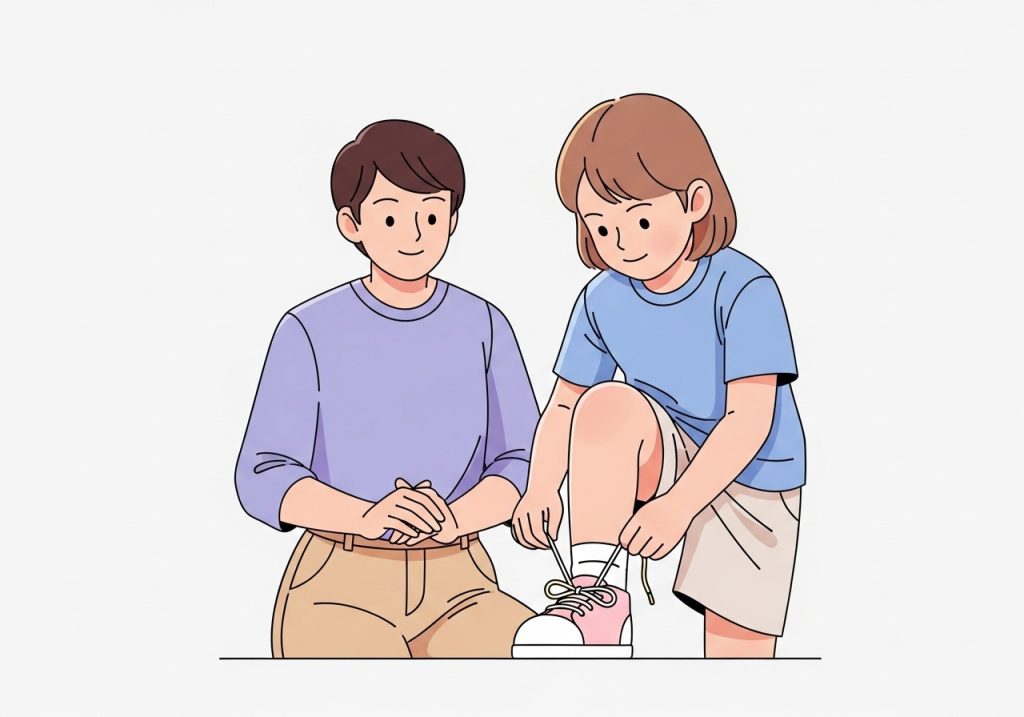
Using Structured Resources as Scaffolds
Well-designed worksheets, checklists, and visual guides can be excellent scaffolding tools. They provide a consistent and predictable structure that helps learners internalize new processes. For example, a worksheet that breaks down the steps of drawing a person can guide a child through the task until they can do it from memory. A feelings chart can help a child identify their emotions, a necessary first step before they can learn to use coping strategies independently.
By incorporating these types of low-prep resources, you can provide effective scaffolds that support skill development across different settings, from the therapy clinic to the classroom and home. The key is to select tools that match the learner’s current level and offer a clear path toward the next step in their development.
Ready to find effective, low-prep resources to support your learners? Explore our shop for professionally designed activities, worksheets, and guides created by an experienced occupational therapist. Find the perfect tool to build skills and confidence today.
Leave a Reply